
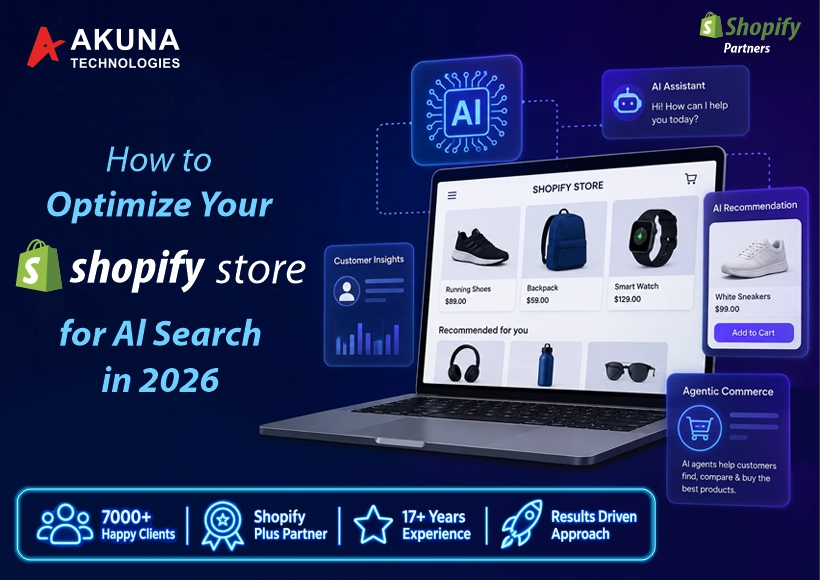
AI is changing how customers discover and buy products online. Instead of searching Google and visiting multiple websites, shoppers can now ask ChatGPT, Google AI Mode, Gemini, Perplexity, and other AI-powered tools to research products and recommend what to buy.
For Shopify merchants, this creates a new opportunity: Shopify AI search optimization.
In 2026, optimizing your Shopify store isn’t only about ranking in traditional search results. Your store also needs to provide clear, accurate and trustworthy information that AI systems can understand and use.
What Is Shopify AI Search Optimization?
Shopify AI search optimization, also known as Generative Engine Optimization (GEO), is the process of improving your website so AI-powered search engines can discover, understand and potentially recommend your products.
Traditional SEO focuses on keywords and search rankings. AI search optimization focuses more heavily on customer questions, product attributes, context, authority and trustworthy information.
The good news is that strong traditional SEO remains the foundation.
1. Optimize Your Shopify Product Pages
Your product pages are among the most important pages for AI-driven shopping.
Don’t use short or generic product descriptions. Provide detailed information about:
- Product features and benefits
- Materials
- Dimensions and specifications
- Colors and sizes
- Compatibility
- Use cases
- Care instructions
- Shipping and returns
- Availability
- Frequently asked questions
For example, instead of saying “Premium waterproof jacket,” explain who the jacket is designed for, what material it uses, how waterproof it is, available sizes and the conditions it is suitable for.
Detailed product information gives both customers and AI systems more context.
2. Add Structured Data
Structured data helps search engines understand important information about your products.
Make sure your Shopify store uses appropriate Product, Offer, Organization, Breadcrumb and Review schema where applicable.
Your product structured data should accurately communicate information such as:
- Product name
- Brand
- Price
- Currency
- SKU
- Availability
- Product images
- Reviews
Keep your structured data synchronized with your actual Shopify product information. Incorrect pricing or availability can create confusing signals.
3. Create Content That Answers Customer Questions
AI search is conversational, so create content around the questions your customers actually ask.
For example:
- How do I choose the right running shoes?
- Which skincare products are best for dry skin?
- What size should I choose?
- Is this product suitable for beginners?
- What is the difference between Product A and Product B?
Create buying guides, comparison articles, FAQs and problem-solving content around these questions.
Use clear headings and provide direct answers rather than filling pages with repetitive keywords.
4. Build Brand Authority
AI systems don’t only look at your Shopify website. Information about your brand can also appear across reviews, publications, industry websites, social platforms and other authoritative sources.
Build genuine authority through:
- Customer reviews
- Digital PR
- Industry publications
- Expert content
- Original research
- Relevant partnerships
- High-quality backlinks
The objective isn’t simply to create more links. It’s to establish your brand as a trustworthy source in your industry.
5. Improve Technical Shopify SEO
Your Shopify store must be easy for search engines and AI systems to discover.
Check your:
- Robots.txt
- XML sitemap
- Canonical URLs
- Redirects
- Internal links
- Mobile performance
- Page speed
- Indexing
- 404 errors
Make sure important product, collection and informational pages aren’t accidentally blocked from crawling or indexing.
6. Optimize Collection Pages and Internal Links
Don’t focus only on individual products.
Create useful Shopify collection pages that clearly explain what the category contains and who the products are for.
Then connect your content logically:
Blog → Buying Guide → Collection → Product Page
This structure helps search engines understand the relationship between your content and products while making it easier for customers to navigate your store.
7. Keep Product Information Consistent
Ensure product information is accurate across your Shopify store, Google Merchant Center, marketplaces and other sales channels.
Pay particular attention to:
- Product names
- Prices
- Inventory
- Product specifications
- Images
- Variants
Consistent information makes it easier for customers and AI systems to understand your products.
Shopify AI Search Optimization Checklist
Before publishing your AI SEO strategy, check that you have:
- Detailed product descriptions
- Accurate product attributes
- Product structured data
- Optimized collection pages
- Helpful buying guides and FAQs
- Strong internal linking
- Fast, mobile-friendly pages
- Crawlable product and collection pages
- Genuine customer reviews
- Consistent product information
- Google Merchant Center optimization
- Ongoing SEO and AI visibility monitoring
Final Thoughts
AI search is becoming an important part of ecommerce discovery. Shopify merchants who invest in technical SEO, detailed product information, structured data, useful content and brand authority can put themselves in a stronger position as AI-powered shopping continues to grow.
AI SEO doesn’t replace traditional SEO. Instead, Shopify AI search optimization builds on the fundamentals of good SEO and makes your store easier for both search engines and AI systems to understand.
How Akuna technologies Can Help
Akuna technologies helps Shopify businesses with Shopify development, redesign, migration, technical SEO, Google Merchant Center optimization, performance improvements and ecommerce growth.
If you want to make your Shopify store more visible across traditional search and the emerging AI search landscape, our team can help develop a strategy tailored to your products, industry and customers.
Ready to optimize your Shopify store for AI search in 2026? Contact Akuna technologies to get started.
Tags: AI search optimization, Generative Engine Optimization, Shopify AI Search Optimization, Shopify AI SEO, Shopify GEO, Shopify SEO 2026